 Request a 20-minute call
Your team has AI. Your work hasn't changed yet.
I help organizations find where work gets stuck. Then I connect AI to the tools you already use, like email, shared drives, spreadsheets, and your CRM, so routine work takes less of your team's week.
Sound familiar?
- You pay for ChatGPT or Copilot. A few people use it. Nothing about how work moves has changed.
- Someone rebuilds the same report by hand every week.
- Follow-up depends on someone remembering.
- What your business knows lives in inboxes and in two or three people's heads.
- You're not sure what's safe to put into AI, so people either avoid it or don't ask.
The tools can now handle much of this. What's missing is someone who understands both the tools and your work.
What AI-enabled work can look like
An illustration of the kind of change we look for.
That's the shift we explore: given what's possible now, why are we still doing it this way?
What we might find, and fix
Every organization is different, so we start by looking at your work. These are the kinds of improvements that often turn up, and that we can build together once we know which ones are worth it.
Whatever we build, a person stays in charge of the decisions and reviews anything that goes to a customer. Your team spends less time finding and moving work, and more time doing it.
A health practice that stopped reordering from memory
Supplies at a small health practice were reordered by memory, so some things ran short while others piled up. I used AI to analyze their inventory and set minimum stock levels and reorder points, then redesigned the forms staff and patients use every day. I built the changes with the people who would use them, so they stuck.
Start with a workshop: bring the work that drives your team crazy.
Your team doesn't need to know much about AI. They just need to know what feels repetitive, tedious, unnecessarily manual, or harder than it should be. Everyone knows that.
Nobody sits through this workshop.
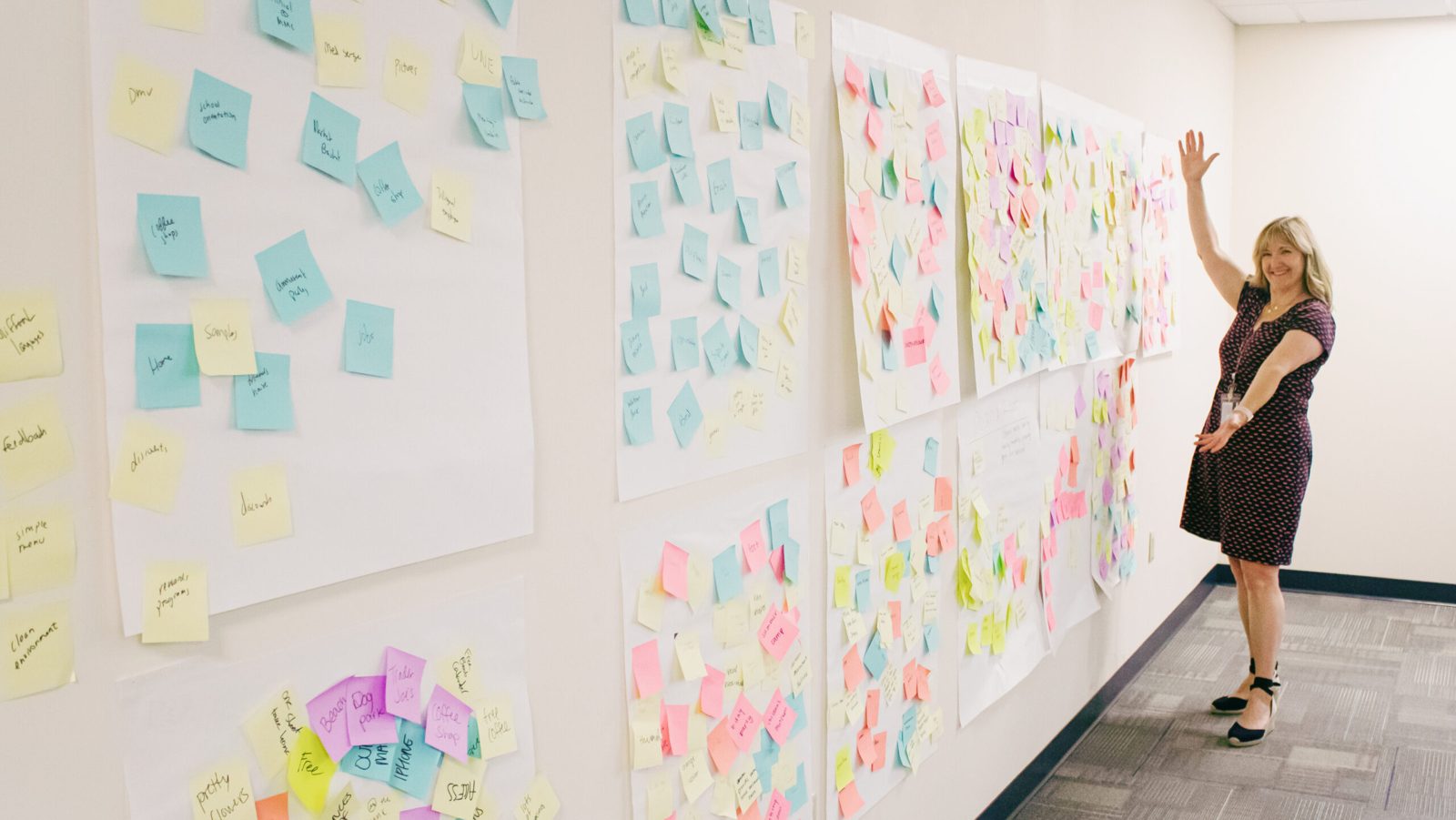
Picture your team on their feet, gathered around laptops and walls of sticky notes, mapping their own work, debating what drives them crazy, and watching ideas take shape in real time.
I'm an experience designer. I design every workshop backward from one goal: a whole team curious, hands-on, and ready to try something new with their own work.
AI can feel intimidating, overhyped, or threatening. In the room, it becomes something people get curious about, together.
“I've been to a hundred of these workshops. This was one of the best.”
“Justine helped our nurses see themselves as innovators… The design sprints brought our team's idea for a microlearning app to life, turning a concept into a tangible, practical tool. Our team left with not only a strong prototype but also the confidence and leadership mindset to continue driving innovation.”
Director of Nurse Education, MaineHealth
Different jobs. Familiar friction.
Your workshop is tailored to your organization. During our planning conversation, we choose the examples most relevant to your team. Here are some of the patterns we might explore.
What people say about working with me
“It was such a success! The team loved it.”
After a hands-on offsite at the Pepperell Mill campus in Biddeford, Maine
“While framed as an ‘icebreaker’ it really was much more than that: team building, problem-solving, collaboration, strategizing, and fun! It was so effective that we would like to explore… building such a session into the standing agenda.”
University of New England
Meet your guide
I've always been a translator.
I was a political science major who ended up leading a mainframe development team. Since then I've mapped how work moved through Bath Iron Works, built a system adopted across Iridium's 11 global gateways, redesigned how the Smithsonian's National Museum of Natural History develops visitor experiences, and founded the University of New England's Office of Innovation.
I'm building these systems in my own businesses first, connecting AI to email, files, and everyday tools, so what I show you is something I've actually used.
Different rooms, same job: take something new and intimidating, make it make sense, build what helps, and leave people feeling competent with it.
“The solution that you built, with virtually no user requirements, was a phenomenal accomplishment…”
From first look to working systems
Most teams move through three steps. You can start at any of them, and you decide after each one whether to go further.
What could your team stop doing by hand three months from now?
Tell me where work feels slower or more manual than it should. A 20-minute call is usually enough to know whether a workshop would help.
justine@wedesignfutures.com